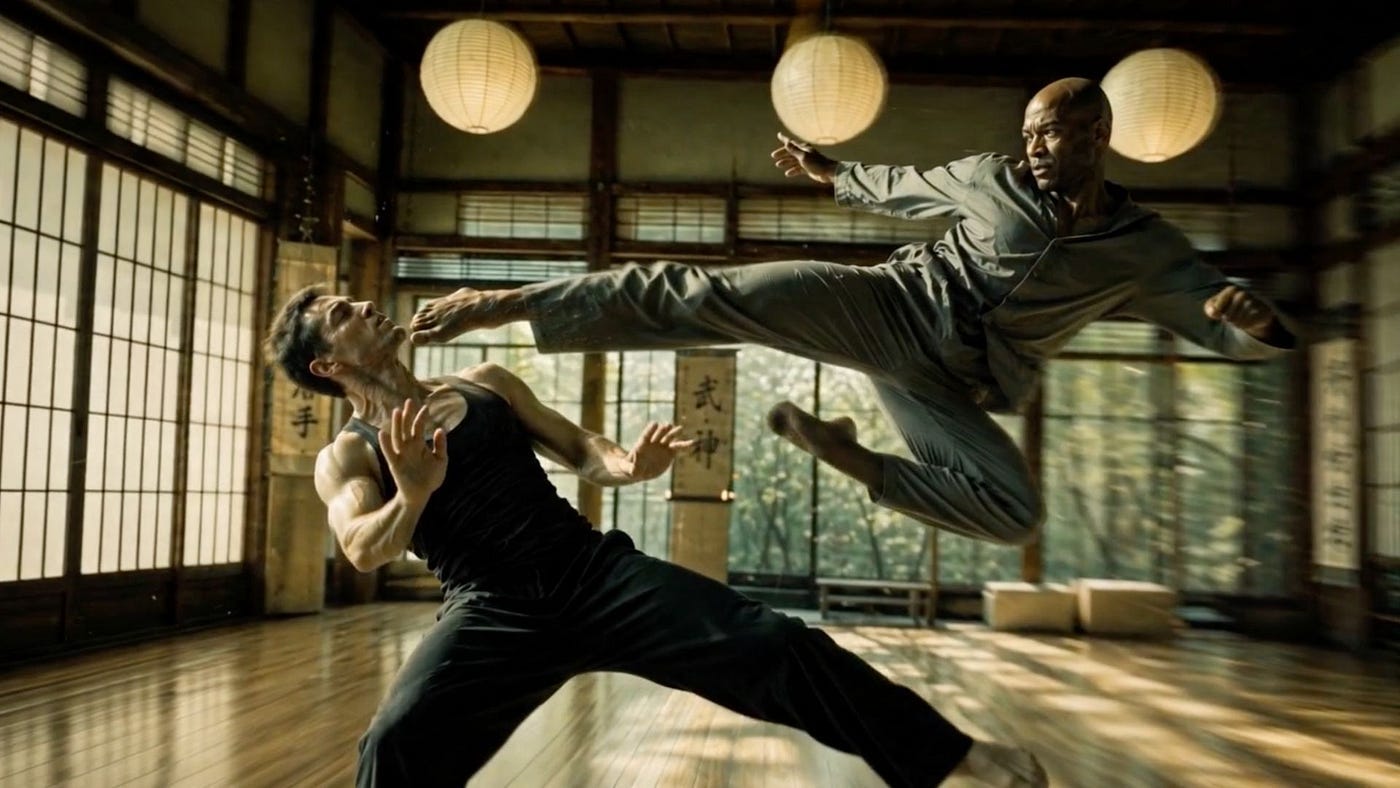
ByteDance released Seedance 2.5 at the end of July, while Alibaba introduced Wan 3.0 several weeks later. For someone looking for the best video model, choosing between them might come down to whichever output looks better.
But output quality is only one factor when choosing the right video model for a specific use case. Generation time affects how long users sit on a loading screen. API pricing determines how many videos can be included in a subscription.
Resolution, reliability, reference limits, and editing features can also decide whether a model fits the intended workflow.
I tested Seedance 2.5, Wan 3.0, and the speed-optimized Wan 3.0 Prime under similar conditions on Topview. All videos were set to 15 seconds, 16:9, and 720p.
I then compared the visual quality, measured the generation time and credit use, and looked through their current feature sets.
Seedance 2.5 vs. Wan 3.0 at a Glance
Here is a summary of how their current APIs compare.
The specifications reveal how differently the models are positioned. Seedance 2.5 accepts far more reference material, while Wan 3.0 offers higher output resolution, a higher frame rate, more input types, and lower generation costs.
According to ByteDance’s Seedance 2.5 announcement, the model accepts up to 30 images, 10 videos, and 10 audio clips in one request. Its current BytePlus API generates 480p or 720p video at 24 frames per second.
Alibaba’s Wan 3.0 documentation lists 480p, 720p, and 1080p output at 30 frames per second. It accepts fewer media references, but it can also use supported documents and public webpages as source material.
How I Tested Both Models
I used text-to-video mode on Topview so neither model could rely on an image or video reference. Each video was configured to run for 15 seconds at 720p in a 16:9 aspect ratio, with native audio enabled.
Setting the parameters for Seedance 2.5 on Topview. Image by Jim Clyde Monge
I used the same prompt and settings for every model. For the quality comparison, I generated one Seedance 2.5 video and two Wan 3.0 videos. The second Wan output gave me a better idea of how much the results could vary between generations.
Comparison #1: Which Model Produces Better Video Quality?
I used a hand-to-hand combat scene for the first comparison. Fast movement involving two people is a difficult test because the model needs to preserve both characters, render physical contact, control the camera, and keep the motion believable.
Here is the prompt I used:
An action-film sequence inside a rain-soaked concrete parking garage at night. Two adult male stunt performers engage in fast hand-to-hand combat. The first man wears a black leather jacket over a red shirt. The second wears a gray hoodie and dark blue pants.
Seedance 2.5
I love the rain effect in the Seedance output. The water, reflections, lighting, and atmosphere make the parking garage feel much more realistic.
The camera work also adds a lot to the scene. It zooms in to focus on the characters’ facial expressions before pulling back when the fight begins. The movement feels intentional and helps establish the tension instead of immediately throwing both characters into random punches.
The fight itself is well composed, even though the model does not generate as many punches as Wan. The characters remain recognizable, their clothing stays consistent, and the wider camera framing makes it easier to follow their movements.
Wan 3.0
The first Wan output contains more punching, which makes the fight feel busier. However, the movements are slower than I expected from the prompt. The strikes lack speed and force, so the scene does not feel like a convincing high-intensity fight.
The background music is also distracting. It competes with the action rather than supporting it, and the environmental details do not have the same realism as the Seedance result. The parking garage looks more like a generated set than a real location.
Wan 3.0 Prime
The second Wan generation has much better background music and contains the most thrown punches among the three videos. It follows the combat part of the prompt more aggressively, and the fight has fewer inactive moments.
However, it still does not match Seedance in realism. The lighting, rain, character movement, and environmental details feel less convincing. One of the characters also appears to teleport during the final few seconds, which makes the ending look funny and strange.
The variation between the two Wan outputs is also noticeable. The second attempt improves the music and action, but the character error near the end introduces a new problem. More activity does not necessarily produce a better scene when the model cannot keep the subjects and their positions stable.
My winner for output quality is Seedance 2.5.
Wan generated more punches, but Seedance produced the more convincing action-film sequence. Its rain effects, camera composition, character consistency, and overall realism made the result feel closer to an actual movie scene.
Comparison #2: Generation Speed and Reliability
The next comparison measured how long each model took to generate a video. I used a rally car scene with fast movement, reflections, environmental effects, camera motion, and native sound.
Here is the prompt:
A tracking shot of a red rally car driving at high speed through a rain-soaked city at night. The camera follows close behind before moving alongside the vehicle. Water sprays from the tires, neon signs reflect across the wet road, and the car passes beneath three streetlights. Include realistic motion, engine audio, rain ambience, and tire sounds.
Seedance 2.5
Wan 3.0
Wan 3.0 Prime
I started timing after submitting each request and stopped when the completed video became available. All three models generated a 15-second, 720p video in a 16:9 aspect ratio.
Wan 3.0 was the fastest in this test. It finished in 58 seconds, while Seedance 2.5 needed 3 minutes and 15 seconds. Wan completed the job 2 minutes and 17 seconds earlier while consuming only one-third of the credits.
Wan 3.0 Prime produced an unexpected result. Alibaba positions Prime as the speed-optimized version, but it took 1 minute and 43 seconds in my test, which was 45 seconds slower than standard Wan 3.0. It also consumed 50% more credits.
One generation is not enough to conclude that Wan Standard is always faster than Prime. Queue traffic and available processing capacity can affect completion time. However, Prime did not provide a speed advantage in this particular run, despite its higher credit requirement.
The winner depends on the priority.
Seedance 2.5 took longer and used more credits, but it produced the better-looking combat video in the quality test. If visual realism is the priority and waiting several minutes is acceptable, Seedance remains a reasonable choice.
Comparison #3: How Much Does Each Model Cost?
The credit difference is already substantial.
On Topview, a 15-second Seedance 2.5 video consumed 22.5 credits. Standard Wan required 7.5 credits, while Wan Prime used 11.25.
This means standard Wan was three times cheaper than Seedance under the platform’s credit system. Prime was twice as cheap as Seedance but 50% more expensive than standard Wan.
BytePlus estimates Seedance 2.5 pricing using a base rate of $0.303 per second and a resolution multiplier. A 720p text-to-video generation without input video has a multiplier of 1.525, producing an estimated cost of approximately $0.462 per output second. A 15-second generation would therefore cost about $6.93.
Alibaba Cloud lists standard Wan 3.0 at $0.10 per second for 720p, making the equivalent 15-second generation $1.50 at list price. Wan 3.0 Prime costs $0.14 per second, or $2.10 for 15 seconds. Alibaba currently offers a temporary discount on standard Wan, but I would use the regular rate when calculating the long-term cost of a product.
At these rates, standard Wan costs less than one-quarter of Seedance for the same duration and resolution. That difference can affect subscription pricing, free trials, monthly credit allowances, and the number of retries an app can give its users.
The cheapest model is not automatically the least expensive in practice. If a lower-cost model requires several attempts before producing an acceptable video, the savings become smaller. Cost per usable output is more useful than cost per generation.
Comparison #4: Which Model Has the Stronger Capability Set?
Both models support text-to-video, image-to-video, first-and-last-frame control, multimodal references, native audio, video editing, and video extension. Their individual limits create different advantages.
Wan 3.0 has better output specifications. Its API supports up to 1080p at 30 frames per second, while Seedance 2.5 currently reaches 720p at 24 frames per second through BytePlus. Wan can also generate clips from two to 30 seconds, while Seedance starts at four seconds.
Seedance 2.5 provides more reference control. A single request can include up to 30 images, 10 videos, and 10 audio clips. This is useful for scenes involving multiple characters, outfits, products, locations, voices, and motion references. ByteDance also supports timestamp-based prompting, targeted edits, camera adjustments, green-screen replacement, and clay-render references.
Wan 3.0 accepts a wider variety of sources. Along with images, videos, and audio, it can use supported documents and public webpages. It also provides standard and Prime variants, giving platforms another way to balance price and generation time.
Seedance has a better reference system and gives creators more control over complex scenes. Wan has better output specifications, broader source inputs, and more flexible pricing.
Where Does Wan 3.0 Have the Edge?
Wan 3.0’s strongest advantage is efficiency. It generated my 15-second test video in less than a minute and consumed one-third of the credits used by Seedance 2.5.
It also supports 1080p output, runs at 30 frames per second, accepts documents and webpages, and offers a separate Prime version. These advantages are useful for an AI video app where generation volume, waiting time, and cost can be just as important as getting the best-looking result from one prompt.
Its weakness in my testing was visual realism. Both Wan combat videos contained more punches, but Seedance handled the camera, rain, lighting, environment, and character consistency better. Wan still needs to close that quality gap before I would choose it purely for cinematic work.
Which AI Video Model Should You Choose?
I would choose Seedance 2.5 when visual realism and composition are the priorities. It was considerably slower and more expensive, but it produced the better action scene. Its larger reference limit also makes it a better fit for complex projects involving recurring characters, products, or locations.
Standard Wan 3.0 is a better pick for a high-volume video generator. It was the fastest and cheapest model in my test, and its API supports 1080p output. Do not overlook this model if you’re doing social videos, quick experiments, and products where users generate several variations.
Wan 3.0 Prime sits between them in price, but its role is less clear based on this single run. I would test it several more times before charging users extra for it. Standard Wan was both faster and cheaper based on the results.
So all in all, users who care about speed and credit use can choose Wan, while those working on cinematic or reference-heavy projects can spend more credits on Seedance.
Final Thoughts
Based on the comparison above, Seedance 2.5 is still my personal choice for video generation. Its combat scene looked more realistic, the rain and lighting were rendered better, and the camera moved with more intention. If I were choosing one output to keep, I would pick Seedance without hesitation.
However, Wan 3.0 has the better practical edge. It generated a 15-second video in only 58 seconds and consumed 7.5 credits, while Seedance took 3 minutes and 15 seconds and used 22.5 credits. Wan also supports 1080p output at 30 frames per second, accepts documents and webpages, and costs far less through the first-party API.
These are the advantages that some devs look for especially when used inside a web app. Faster and cheaper generations make it possible to offer more credits, support more retries, and serve more users without increasing subscription prices.
If I were adding both models to an AI video platform, Wan 3.0 would be the affordable default, while Seedance 2.5 would be the premium option for cinematic and reference-heavy projects.
What do you think of this comparison? Let me know if you find it useful.
Hi there! Thanks for making it to the end of this post! If you enjoyed this content and would like to support my work, consider becoming a paid subscriber. Your support means a lot!


